When a hydraulic cable puller shuts down mid-pull with hot oil and a rising temperature gauge, the cause is almost always one of three things: heat is being generated faster than it can be removed, the cooling system is degraded, or the machine is being run outside its intended duty. Understanding these causes keeps hydraulic cable puller overheating from stopping a stringing job.
Where the Heat Comes From
Hydraulic energy that does not become useful pulling work becomes heat. Long pulls at low speed, repeated start-stop cycles and relief-valve spill all raise oil temperature. If the reservoir and cooler cannot reject that heat, the oil thins, internal leakage grows and efficiency falls — a self-reinforcing loop.
The Three Root Causes
- Cooling system loss. A blocked radiator, low coolant or a failed fan removes the only path for heat rejection.
- Sustained overload. Running continuously near maximum intermittent rating instead of the continuous rating heats the oil far sooner.
- Long low-speed duty. Continuous operation with little oil passing through the cooler prevents heat from ever reaching the radiator.
Compare Intermittent and Continuous Ratings
The single most useful protection is to run at the continuous rating and reserve the intermittent figure for short sections. Two Galaxy pullers show how these ratings differ within one range:
Reference Specification — Hydraulic Cable Pullers
| Parameter |
SA-YQ40 (GS40) |
SA-YQ150 (GS150) |
| Max intermittent pull |
40 kN |
150 kN |
| Max continuous pull |
30 kN |
120 kN |
| Max speed |
5 km/h |
5 km/h |
| Pull at max speed |
20 kN |
60 kN |
| Certification |
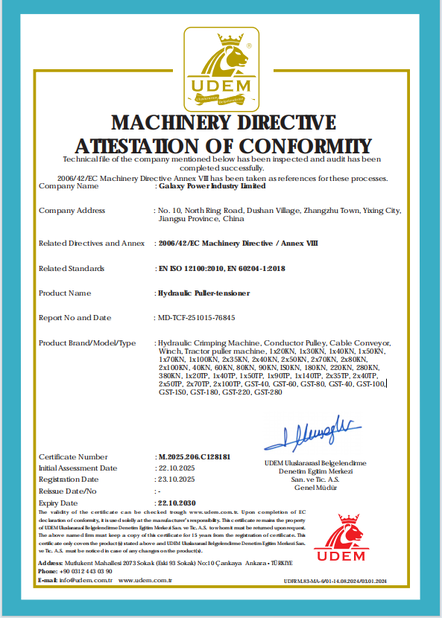
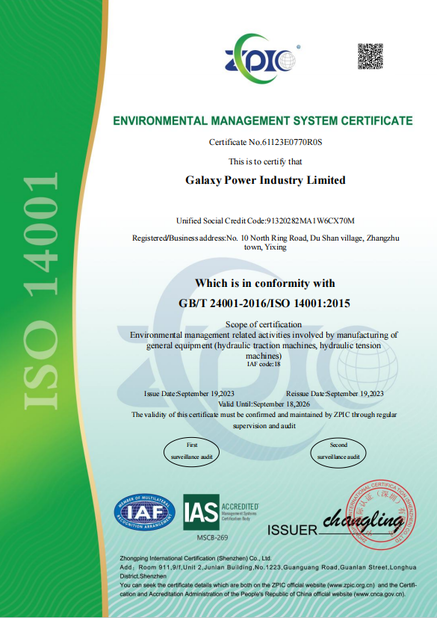
ISO / CE |
ISO / CE |
| Place of origin |
Jiangsu, China |
Jiangsu, China |
Notice that the continuous rating is roughly 75–80% of the intermittent rating. Running a puller above its continuous figure on a long, hot job is a direct route to overheating.
Symptoms That Point to Overheating
Overheating announces itself before it stops the job. The oil temperature gauge climbs faster than usual, the machine loses pulling force at a given setting, and hoses feel hot to the touch. In severe cases the relief valve opens continuously and the machine makes a constant hissing sound as it spills pressure as heat. Operators who watch for these signs can pause and cool the machine before the alarm trips, avoiding an unplanned stop in the middle of a pull.
Prevention and Field Checks
- Match machine rating to the calculated pull, keeping 20% margin.
- Schedule long pulls at the continuous rating, not the intermittent one.
- Check radiator fins, coolant level and fan operation before every shift.
- Keep the hydraulic reservoir filled to the correct level so oil has time to cool.
- Allow cool-down intervals between heavy sections.
- Monitor oil temperature and stop before it reaches the alarm limit.
The diesel 60 kN 6 T hydraulic cable puller machine and the lighter 40 kN hydraulic cable puller both work within these duty limits when matched to the job. The wider Hydraulic Cable Puller range covers ratings from 4 T to 18 T.
FAQ
Is overheating a fault or an overload symptom?
Usually an overload or cooling symptom, not a defect. If the machine cools normally when lightly loaded, the underlying issue is duty or airflow.
Can I keep pulling if the temperature warning shows?
No. Reduce load and let the oil cool. Continuing to pull once the alarm appears risks seal and pump damage.
How often should hydraulic oil be checked?
Check level and condition each shift and sample the oil on a planned schedule. Contaminated or degraded oil cools and lubricates far less effectively.
Get a Selection Recommendation
Provide your calculated pull, route profile, ambient temperature and expected continuous run time, and we will match a puller whose continuous rating keeps oil temperature under control.


 يجب أن تكون رسالتك بين 20-3000 حرف!
 Arabic